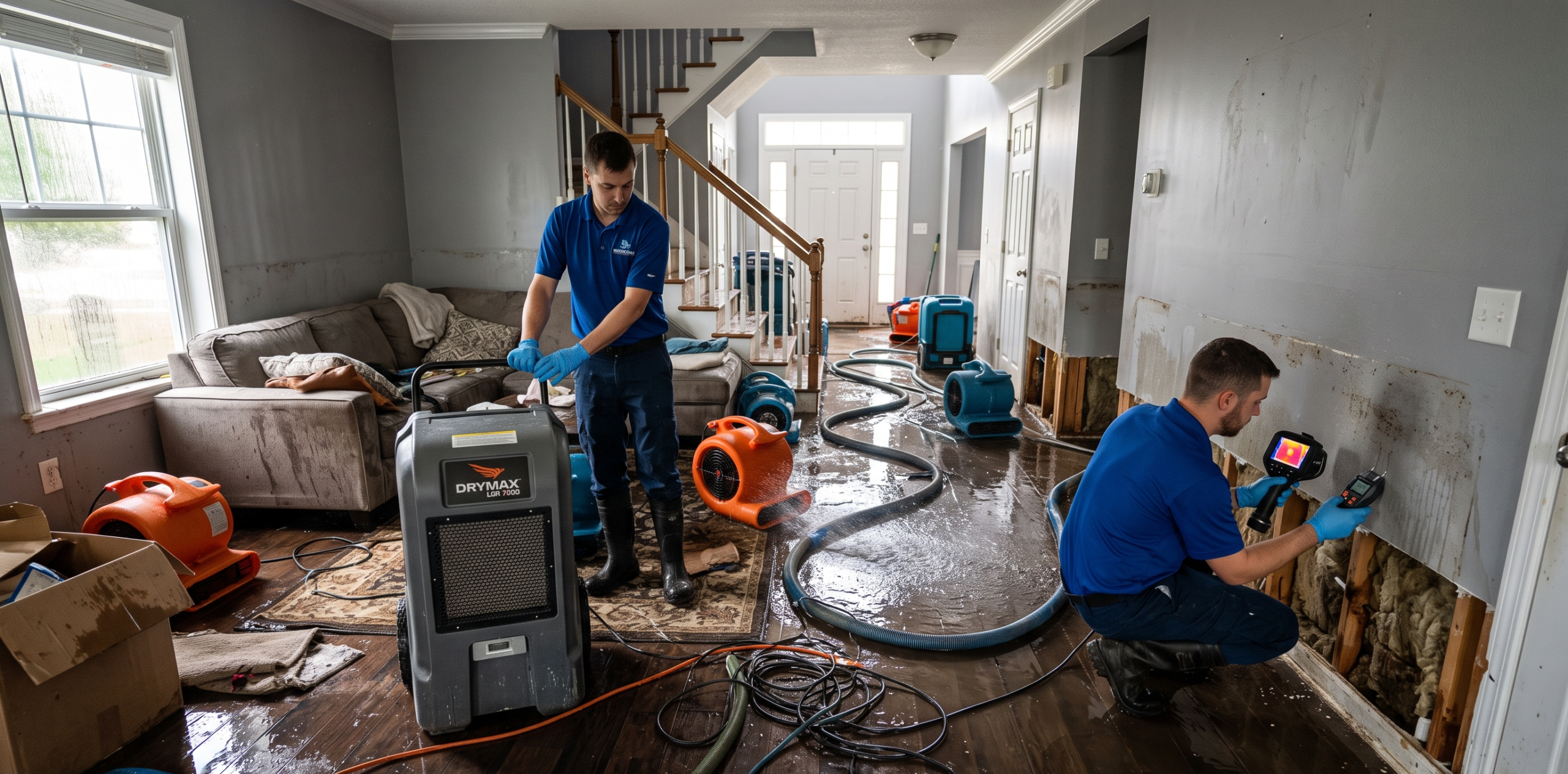
When your house floods, every second counts. Standing water doesn’t just ruin flooring and furniture; it seeps into drywall, wood framing, and insulation within hours, setting the stage for mold growth and structural decay. As a professional who has tackled countless flooded homes, I’ve learned that speed and the right techniques separate a quick fix from a costly disaster. Here’s how to dry out a flooded house quickly, step by step.
What Should I Do Immediately After a Flood?
The first step is safety. Shut off electricity to the affected areas (unless you must stand in water to do it—then call an electrician). Turn off the main water valve if the flood came from a burst pipe. Then, remove as much water as possible with a wet/dry vacuum, sump pump, or a bucket if the water is shallow. If the flooding is extensive, you’ll need professional Emergency Water Pump Out Service to extract standing water fast.
How Do I Dry Out a Flooded House Quickly?
After water extraction, the goal is to eliminate moisture from all surfaces and the air.
Here’s the expert system we use:
- Use high-velocity air movers: Industrial fans create airflow across wet surfaces, accelerating evaporation. Place them at angles to direct air under cabinets and into corners.
- Deploy commercial dehumidifiers: These pull moisture out of the air. For a severely flooded house, you need low-grain refrigerant dehumidifiers (LGR). Consumer-grade units won’t cut it.
- Apply heat: Raising the temperature speeds evaporation. If safe, set thermostats to 75-80°F. Never use the HVAC system if it was flooded—it can spread mold spores.
- Open windows and doors: If outdoor humidity is lower than indoor, cross-ventilation helps. In humid climates, keep the house sealed and rely on dehumidifiers.
- Remove water-damaged materials: Cut out wet drywall at least 12 inches above the water line, remove soaked insulation, and pull up carpet padding. These items act like sponges and prevent drying.
How Long Does It Take to Dry a Flooded House?
Drying time varies by water amount, materials, and ventilation. Generally, a flooded home takes 3–5 days with industrial equipment. Porous materials like drywall and wood may take longer. Our team monitors moisture levels with meters to ensure the structure is completely dry before rebuilding. Remember: rushing the drying can lead to mold, so patience is key.
Can I Dry Out a Flooded House Myself?
For small floods (e.g., from a leaking washing machine) with clean water, you may handle it with rented fans and dehumidifiers. But for larger floods, especially those involving sewage or floodwater, professional water extraction
and drying are essential. Sewage contains bacteria and viruses; floodwater can bring chemicals and debris. Professionals have protective gear and industrial-grade equipment to ensure safe and complete drying. If you have any doubt about the water category (clear, gray, or black), call us at (803) 710-6115 for an assessment.
What Equipment Do Professionals Use to Dry a Flooded House?
| Equipment | Purpose | Why Professional Grade Matters |
|---|---|---|
| High-velocity air movers | Create airflow to evaporate moisture | Move air at 2,000+ CFM; consumer fans are too weak |
| LGR dehumidifiers | Remove water vapor from the air | Extract 150+ pints per day vs. home units’ 30 pints |
| Moisture meters | Measure moisture content in materials | Pinpoint hidden wet spots to avoid mold |
| Infrared cameras | Detect water behind walls/ceilings | See unseen moisture without tearing out drywall |
| Submersible pumps | Remove standing water quickly | Move hundreds of gallons per minute |
How Do I Prevent Mold After a Flood?
Mold can start growing within 24–48 hours. To prevent it:
- Begin drying immediately, don’t wait for insurance adjusters.
- Throw away any porous items that got soaked, like carpets, mattresses, and pillows.
- Disinfect hard surfaces with a bleach solution (1 cup bleach per gallon of water) or a commercial antimicrobial spray.
- Keep humidity below 50% using dehumidifiers.
- Monitor for musty odors and visible spots even after drying. If you see mold, call a professional mold remediation company.
When Should I Call a Professional for Flooded House Drying?
Call a professional if:
- Water is more than 2 inches deep.
- Floodwater is contaminated (sewage, river water).
- Water has been standing for more than 24 hours.
- The flood affects multiple rooms or the entire home.
- You can’t dry the structure within 48 hours.
- You have a compromised immune system or respiratory issues.
Professional teams like ours have the equipment and expertise to dry your home within days, not weeks, and can help with insurance paperwork. For immediate help, call (803) 710-6115. We provide emergency water pump-out and drying around the clock.
How Much Does It Cost to Dry Out a Flooded House?
Costs vary based on flood size and drying needs. On average, professional drying services range from $1,000 to $4,000 for a moderate flood. This includes extraction, equipment setup, monitoring, and removal of damaged materials. It’s cheaper than dealing with mold damage, which can run $5,000–$15,000. Many insurance policies cover water damage restoration, so check your policy and call a pro early.
Final Expert Tips for Drying a Flooded House
- Act fast: The first 24 hours are critical for preventing secondary damage.
- Document everything: Take photos and keep receipts for insurance claims.
- Don’t use regular appliances: Vacuum cleaners, fans, or heaters not rated for wet conditions can shock or catch fire.
- Check hidden areas: Water can travel along studs and under subfloors. Use a moisture meter if you have one.
- Ventilate safely: If you have a generator, keep it outside to avoid carbon monoxide poisoning.
Drying out a flooded house quickly is possible with the right approach. Prioritize safety, remove water fast, and use industrial fans and dehumidifiers. For serious floods, don’t hesitate to call a professional water damage restoration company. It’s an investment in your home’s health and your family’s safety.