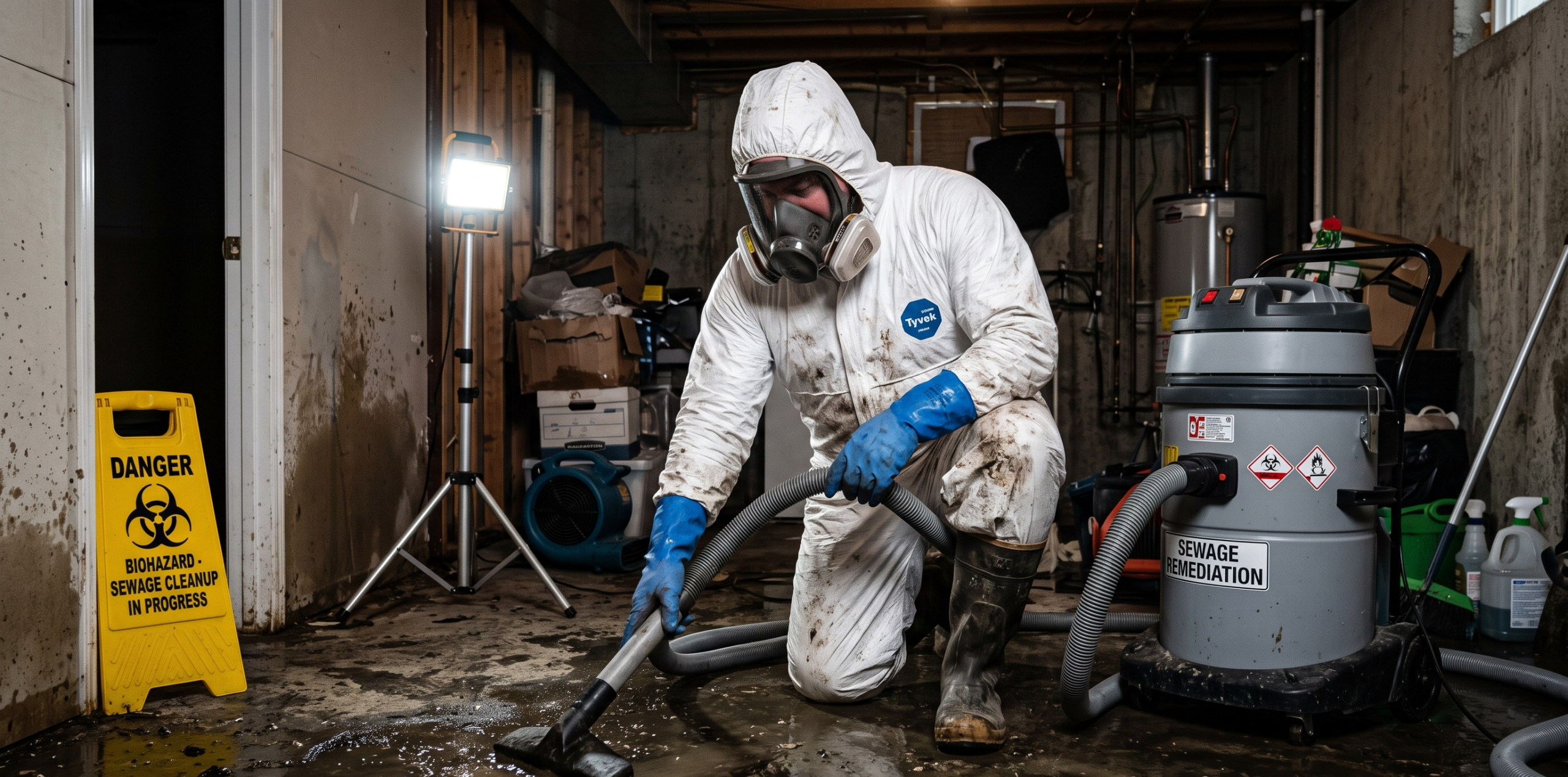
When raw sewage backs up into your home, it’s more than just a nasty mess; it’s a serious health emergency. Many homeowners underestimate the risks, but the question of whether sewage backup cleanup is dangerous has a clear answer: yes, it is extremely dangerous if not handled properly. As restoration professionals, we’ve seen the consequences of DIY cleanup attempts firsthand.
Sewage contains a cocktail of pathogens, chemicals, and debris that can cause severe illness. That’s why understanding the health hazards and following strict safety protocols is critical. If you’re dealing with a sewage backup, call (803) 710-6115 immediately for professional help.
What exactly is in sewage backup water?
Sewage backup water is classified as Category 3 water—the most contaminated type. It contains human waste, bacteria like E. coli and Salmonella, viruses such as hepatitis A and norovirus, parasites like Giardia, and chemical contaminants from household cleaners and industrial waste. This black water can also contain mold spores and other allergens. Simply put, it’s a breeding ground for disease.
Is sewage backup cleanup dangerous?
Yes, without proper training and equipment, cleanup is extremely dangerous. The moment sewage enters your home, it begins to soak into porous materials like drywall, carpet, and wood. Touching or inhaling contaminants can lead to serious infections. Homeowners should never attempt DIY sewage cleanup because they lack the protective gear, industrial-grade disinfectants, and knowledge to eliminate all pathogens.
Even after visible water is removed, harmful microorganisms can linger. Professional restoration teams use EPA-approved biocides and HEPA vacuums to ensure complete sanitization. For comprehensive sewage cleanup services, trust experts who follow OSHA and IICRC standards.
What are the main health hazards of sewage backup?
Exposure to sewage backup can cause a range of illnesses.
Here are the most common health hazards:
- Gastrointestinal infections from ingesting bacteria or viruses include symptoms such as nausea, vomiting, diarrhea, and abdominal cramps.
- Respiratory problems from inhaling airborne mold spores, bacteria, or chemical fumes can trigger asthma, allergies, or lung infections.
- Skin infections like dermatitis or cellulitis if contaminated water touches open wounds or even intact skin after prolonged contact.
- Eye and ear infections from splashes.
- Tetanus risk if sewage contains sharp debris like broken glass or metal.
What safety precautions should you take when cleaning sewage?
If you absolutely must enter a sewage-affected area before professionals arrive, follow these critical steps:
- Evacuate pets and children immediately.
- Turn off HVAC systems to prevent spreading contaminants.
- Wear full PPE: rubber boots, waterproof gloves, goggles, N95 respirator or higher, and disposable coveralls.
- Avoid direct contact with any standing water. Do not walk through it.
- Do not use household fans—they can spread pathogens into the air.
These steps are temporary. Complete safety requires professional extraction, drying, and disinfection. Our team follows strict protocols for sewage backup cleanup and disinfection to eliminate health risks.
Why should you hire professionals for sewage backup cleanup?
Professional restoration companies have the training, equipment, and experience to handle sewage safely. We use:
- Industrial-grade pumps and vacuums to remove contaminated water.
- Antimicrobial and disinfectant solutions that kill bacteria, viruses, and mold.
- HEPA air scrubbers to filter airborne particles.
- Moisture meters and thermal imaging to detect hidden moisture that could lead to mold.
- Proper disposal procedures for hazardous waste.
Attempting to clean up without these tools almost guarantees lingering contamination. Plus, professionals can identify structural damage and prevent future issues like mold growth. For a thorough job, schedule a professional assessment right away.
How can you prevent sewage backups in your home?
While not all backups are preventable, these tips reduce your risk:
- Flush only toilet paper and human waste; avoid wipes, feminine products, or grease.
- Install backwater prevention valves on main sewer lines.
- Maintain your sewer line with regular inspections and cleaning.
- Fix leaks quickly to prevent excess water flow.
- Avoid planting trees near sewer lines (roots can damage pipes).
Contact us for safe sewage cleanup
Sewage backup is not a DIY job. The health risks are too high, and improper cleanup can lead to long-term problems. Our certified technicians are available 24/7 for emergency response. We arrive with full PPE, commercial-grade equipment, and a proven process to restore your home safely. Call (803) 710-6115 now or visit our service page for details. Don’t let a sewage backup compromise your family’s health—act fast and rely on professionals.