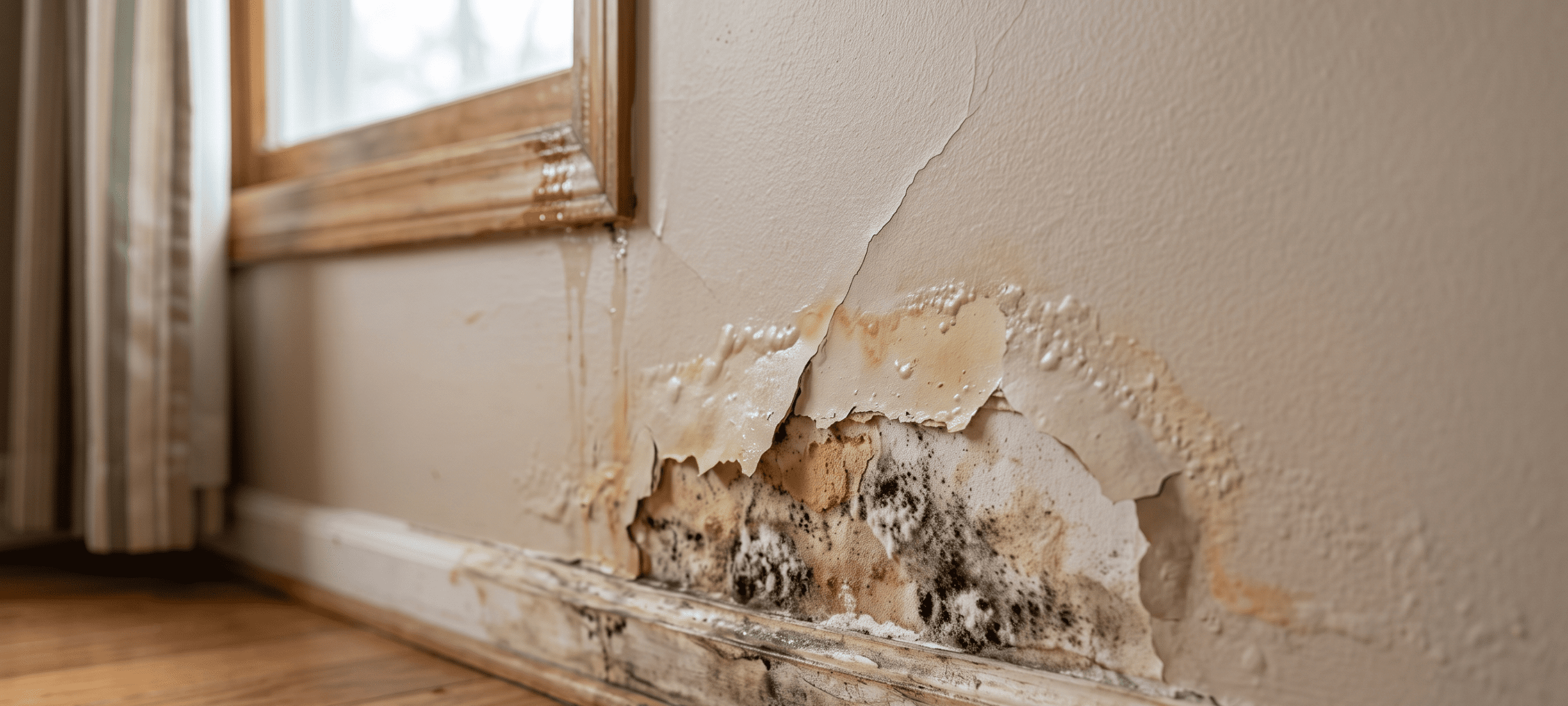
If you notice soft, warped, or bulging walls, musty odors, or dark stains, you may have signs of structural water damage in walls that require immediate attention. Catching these symptoms early can prevent costly repairs and safety hazards. Here’s our expert guide to identifying and acting on water damage before it compromises your home.
What Are the Most Common Signs of Structural Water Damage in Walls?
The most visible indicators include discoloration (yellow, brown, or dark stains), peeling paint or wallpaper, and warping or bulging. But structural damage goes deeper. Look for cracks in drywall, sagging ceilings, and spongy textures when you press on the wall. Efflorescence a white chalky residue on masonry is another red flag.
Soft or Spongy Walls
When you press a wall and it feels soft or gives way, water has likely saturated the drywall or wood behind it. This is a clear sign of advanced water damage that has compromised the material’s integrity. Do not ignore this—structural failure can follow.
Cracks in Drywall or Plaster
Hairline cracks or separated seams often appear after moisture causes materials to swell and contract. These cracks may follow tape lines or emerge in new spots. If you see them, especially combined with other signs, suspect hidden water damage.
How Can You Tell If Water Damage Is Old or New?
Touch and color provide clues. New damage feels damp and spongy; old damage feels dry and brittle. Stains that are dark or have multiple rings are typically older. Mold growth suggests time has passed. Newer damage often has a sharp, musty smell while older damage may have a more stagnant odor.
What Hidden Signs Should Homeowners Watch For?
Not all water damage is obvious.
Here are signs that indicate trouble behind the wall:
- Musty or earthy smells: Mold and mildew are growing.
- Rust on nails or screws: Moisture is present near metal fasteners.
- Warped baseboards or trim: Wood absorbs moisture and distorts.
- Loose or creaking baseboards: Adhesives fail when wet.
- Unusually high humidity: A sign of ongoing moisture intrusion.
Is Structural Water Damage Dangerous?
Yes. Beyond cosmetic issues, water can rot wooden framing, corrode metal supports, and weaken drywall to the point of collapse. Mold growth poses health risks like respiratory problems and allergies. If you suspect structural damage, do not delay call a professional.
When Should You Call a Professional for Burst Pipe Water Damage Repair?
Call immediately if you see any of the following: standing water, sagging ceilings, bulging walls, or if you suspect a burst pipe. Even small leaks can cause hidden structural damage. Our team provides burst pipe water damage repair and can assess the full extent. For emergencies, reach us at (803) 710-6115.
How Much Does Professional Water Damage Restoration Cost?
Costs vary widely based on damage extent, materials, and location. For minor repairs, expect $200–$500. Major structural drying and reconstruction can run $2,000–$10,000 or more. Most insurance policies cover sudden water damage but check your deductibles. We provide free estimates and work with your insurance.
| Damage Type | Estimated Cost Range |
|---|---|
| Small stain repair (drywall patch & paint) | $200–$500 |
| Moderate water extraction & drying (per room) | $500–$2,500 |
| Major structural restoration (including framing) | $2,000–$10,000+ |
| Mold remediation (add-on) | $500–$6,000 |
Can You Repair Structural Water Damage Yourself?
Only surface-level issues (like small stains) are DIY-friendly. For anything involving soggy drywall, cracked framing, or mold, hire a professional. Incorrect drying leads to further rot and mold growth. Trust experienced contractors for burst pipe water damage repair to ensure safety and thoroughness.
How to Choose a Contractor for Structural Water Damage Repair?
When hiring, verify the following:
- Licensing and insurance: Required in most states.
- Experience with structural drying: Ask about moisture meters and drying equipment.
- References: Check recent similar jobs.
- Written estimate: Avoid verbal quotes.
- 24/7 emergency service: Water damage doesn’t wait.
We meet all these criteria. Call (803) 710-6115 for prompt, professional service.
How to Prevent Structural Water Damage in the Future
Prevention saves money and stress.
Here’s our checklist:
- Inspect plumbing regularly for leaks.
- Clean gutters and downspouts to direct water away.
- Seal windows and doors.
- Monitor humidity with a hygrometer (keep below 50%).
- Install water leak detectors near appliances.
- Maintain caulking around showers and tubs.
For more tips, visit our blog or learn about structural drying services.
Final Thoughts
Early detection of signs of structural water damage in walls is key to protecting your home and health. If you spot any warning signs—soft spots, cracks, odors, or stains act quickly. Contact our team for burst pipe cleanup and full restoration. We’re here 24/7.