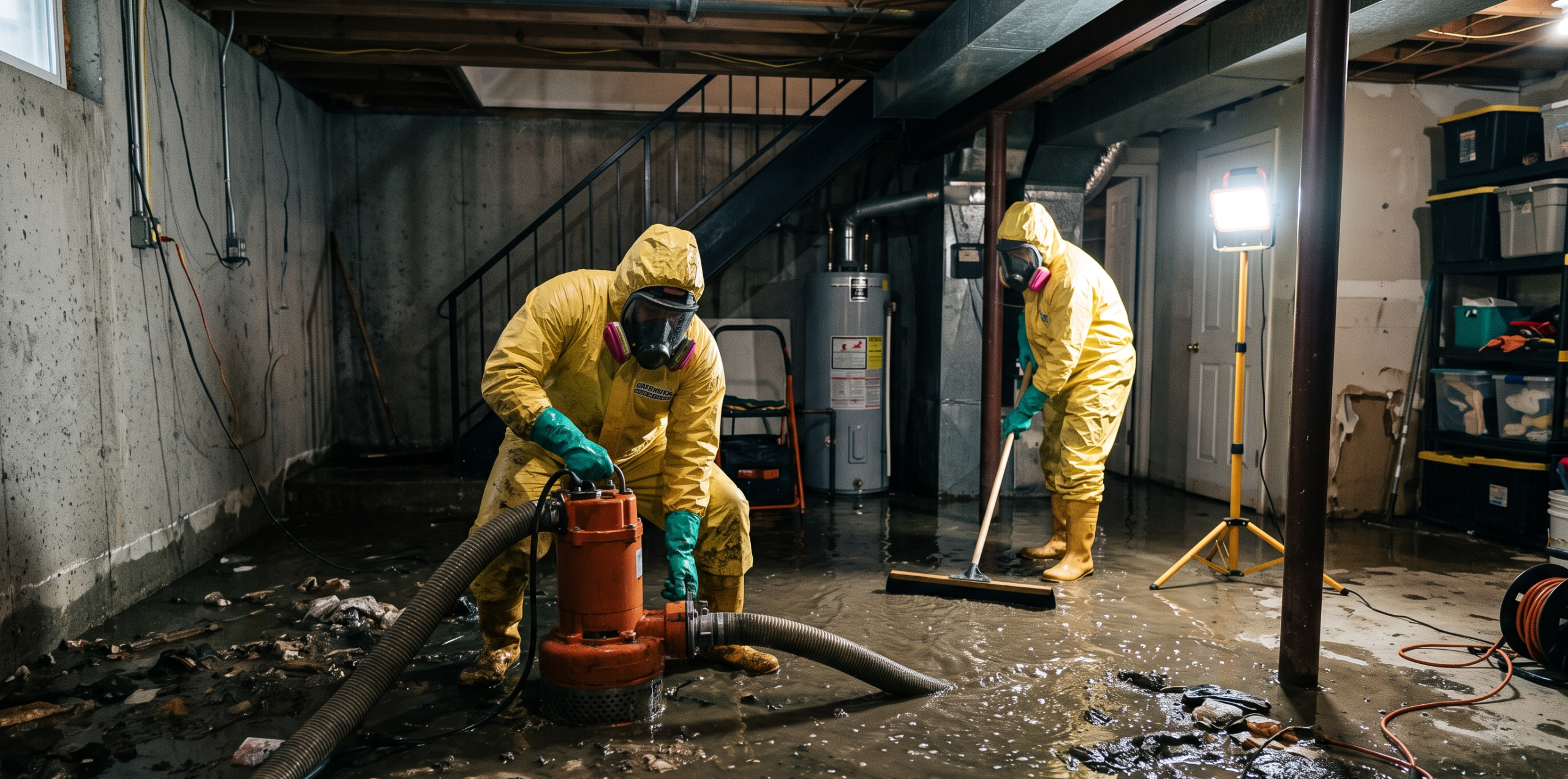
When raw sewage backs up into your basement, it’s one of the most stressful and hazardous situations a homeowner can face. We’ve cleaned up countless sewage backups, and we know the panic that sets in when you see that filthy water rising. But here’s the truth: your first actions in the first 30 minutes can make the difference between a manageable restoration and a long-term health crisis. In this guide, we’ll walk you through exactly what to do when basement floods with sewage, from emergency steps to final cleanup.
Why Is Sewage Backup in the Basement So Dangerous?
Sewage contains bacteria, viruses, parasites, and other pathogens that can cause serious illness. Unlike clean water floods, sewage is Category 3 black water. Prolonged exposure can lead to infections, respiratory issues, and allergic reactions. That’s why professional sewage cleanup is non-negotiable for your health and safety.
Step 1: Ensure Personal Safety First
Immediately turn off the electricity to the affected area. Water and electricity are a deadly combination. If the electrical panel is in the basement and dry, switch off the breaker. If the panel is wet or you can’t safely access it, call an electrician.
Next, shut off the water supply to the house or isolate the basement drain system to stop further inflow. Then evacuate everyone from the area—including pets. Do not walk through the sewage to save belongings. Contaminated water can soak through shoes and clothing. If you have infants, the elderly, or immunocompromised individuals, keep them far away.
Step 2: Call a Professional 24-Hour Flooded Basement Cleanup Service Immediately
Do not attempt DIY sewage cleanup. This is not a job for a shop vac and bleach. Professional restoration companies have the proper training, protective gear, industrial-strength disinfectants, and extraction equipment to handle biohazardous waste. A quick call to (803) 710-6115 connects you with our team for immediate 24-hour flooded basement cleanup. We respond around the clock because sewage doesn’t wait for business hours.
Step 3: Avoid Contact with Contaminated Water
Even if you’re wearing rubber boots and gloves, minimize exposure. The longer sewage sits, the deeper it penetrates into porous materials like drywall, wood, and concrete. Do not try to mop or sweep the water it only aerosolizes pathogens, making them easier to inhale. Wait for the pros with HEPA vacuums and negative air machines.
Step 4: Identify and Stop the Source
Common causes of basement flooding with sewage include clogged main lines, tree root intrusion, damaged septic systems, and heavy rain overwhelming municipal sewers. While you wait for help, locate the main sewer cleanout (a capped pipe usually on the side of your house) and ensure it’s clear. A plumber may need to snake the line. If a burst pipe is involved, a burst pipe cleanup specialist can help. But don’t attempt repairs yourself in standing sewage.
Step 5: Document the Damage for Insurance
If it’s safe to do so from a dry area, take photos and videos of the sewage-covered basement. Capture the depth of water, affected items, and structural damage. This documentation is crucial for your insurance claim. Most homeowner policies cover sewage backup if you have a specific endorsement. Do not start cleaning until after you’ve recorded evidence.
Step 6: Professional Sewage Cleanup Process
Here’s what our crew does once we arrive:
- Assessment & containment: We set up barriers to prevent contamination from spreading to your upstairs living areas.
- Water extraction: Industrial pumps remove standing sewage quickly.
- Removal of contaminated materials: Carpet, padding, drywall, insulation, and soaked wood are disposed of following biohazard protocols.
- Cleaning and disinfection: EPA-registered antimicrobials kill pathogens on all surfaces.
- Drying and dehumidification: Commercial air movers and dehumidifiers dry the structure to prevent mold growth.
- Sanitization fogging: A mist of disinfectant reaches every crack and crevice.
- Restoration: Repair or replace walls, floors, and finishes.
How Long Does Sewage Cleanup in a Basement Take?
Typical sewage cleanup from start to finish can take 3 to 7 days, depending on the extent of damage and drying time. Severe cases involving deep seepage into concrete or extensive furniture loss may require up to two weeks. Our team works efficiently but thoroughly cutting corners on drying leads to mold.
Can You Dry Out a Basement After Sewage Flooding Yourself?
No. Drying a basement after a sewage backup requires more than fans and dehumidifiers. Without professional structural drying and antifungal treatments, residual moisture can cause mold to germinate within 24 hours. Plus, sewage-soaked drywall and insulation must be removed because they cannot be fully sanitized.
What Should You Throw Away After Sewage Backup?
Anything porous that contacted sewage should be discarded: carpets, rugs, upholstered furniture, mattresses, pillows, cardboard boxes, paper goods, and food. Hard non-porous items like metal, glass, and plastic can be cleaned and disinfected, but only by professionals using hospital-grade solutions. Do not try to salvage baby toys, stuffed animals, or wooden cutting boards.
Is Sewage Backup Cleanup Covered by Insurance?
Most standard homeowners’ policies exclude sewage backup unless you have added a specific rider or endorsement. Check your policy. If you have coverage, file a claim as soon as possible. If not, the cost of professional cleanup is still far less than the medical bills from waterborne diseases or mold remediation later. Call (803) 710-6115 for a free estimate on your basement flood cleanup.
How to Prevent Future Sewage Floods in Your Basement
After cleanup, take these preventive steps:
| Prevention Tip | Details |
|---|---|
| Install a backwater valve | Prevents sewage from flowing backward into your basement during heavy rain or sewer surcharges. |
| Clear main line clogs | Have a plumber snake the main sewer line every 1-2 years. |
| Fix leaks immediately | Even small leaks can attract tree roots that eventually block the line. |
| Elevate appliances | Raise hot water heaters, washers, and furnaces on blocks or platforms. |
| Install a sump pump with battery backup | Power outages often accompany floods. |
Final Thoughts: Don’t Go It Alone
Sewage backup is not just a mess; it’s a health emergency. We’ve seen homeowners try to handle it themselves and end up with severe respiratory infections or mold problems that cost thousands more to fix. Trust the experts who deal with hazardous materials every day. When you face a basement flooding emergency, remember these steps: stay safe, call for professional help immediately, and let the trained crew handle the rest. Your family’s health and your home’s structure depend on it.