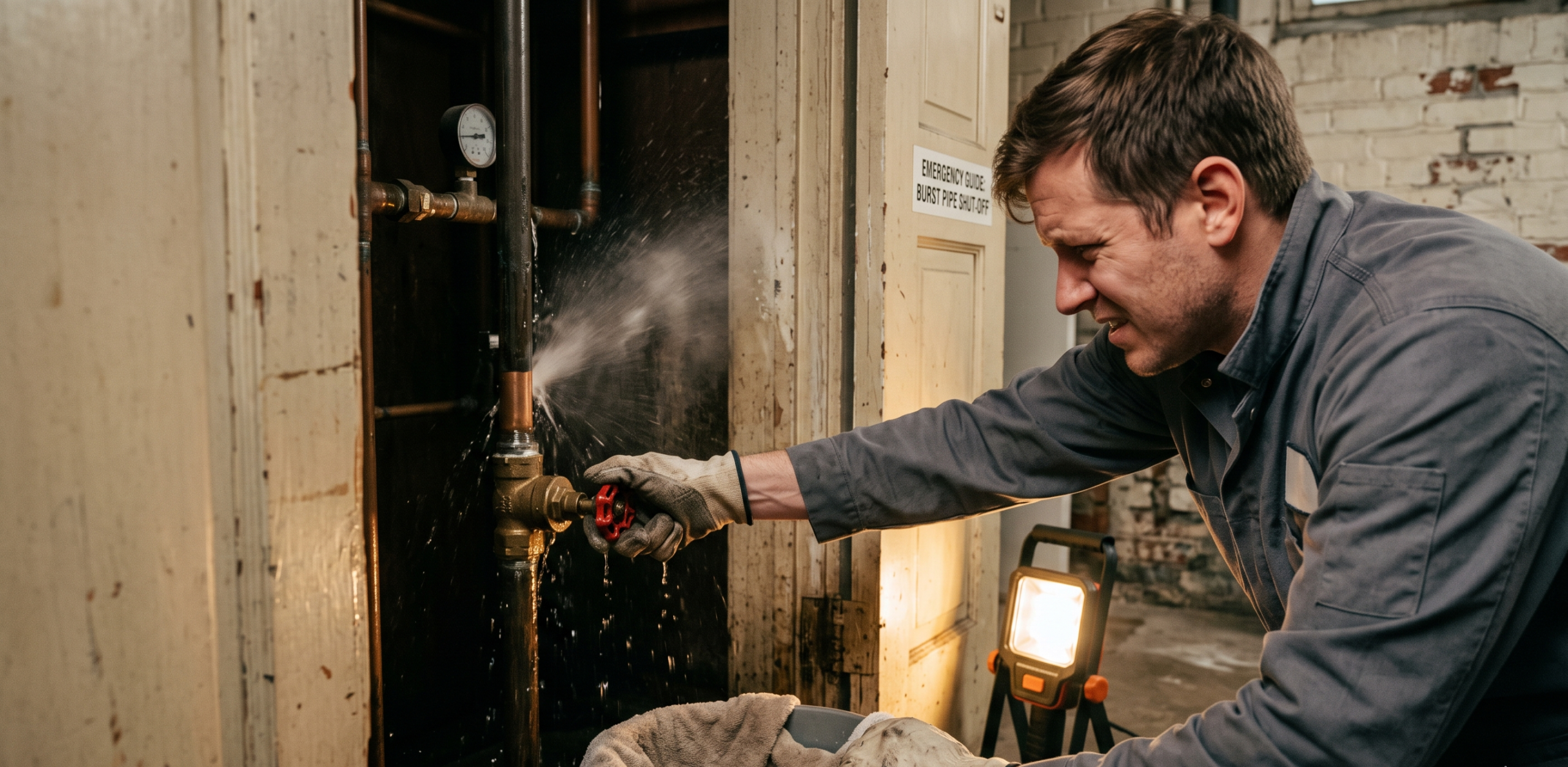
When a pipe bursts, your first move is critical: shut off the main water supply valve by turning it clockwise until it stops. Then open all faucets and flush toilets to drain remaining water. Finally, call a professional plumber and water damage restoration team immediately. Every minute counts—water can damage flooring, walls, and furniture within hours.
Where is the main water shut-off valve located?
The main shut-off valve is typically near where the water line enters your home.
Common spots include:
- Basement or crawl space: on a wall near the front of the house or close to the water heater.
- Utility room or garage: often near the water meter or pressure tank.
- Outside: near the foundation or in a buried box by the street (for homes without basements).
- Under a sink: in slab-on-grade homes, the main valve may be under the kitchen or bathroom sink.
If you don’t know where yours is, take a few minutes now to locate and clearly label it. In an emergency, you won’t have time to search.
How do I shut off the valve? (Wheel vs. lever)
Older homes often have a round wheel handle that requires several full clockwise rotations. Newer homes use a lever handle that needs only a quarter turn (90 degrees) until the handle is perpendicular to the pipe. Either way, turn it as far as it will go.
If the valve is stuck or hard to turn, use a wrench or pliers for better grip. Never force it so hard that you break the valve—if it won’t budge, call a plumber immediately.
What if I can’t find the main valve or it fails?
If you can’t locate the main valve or it’s broken, look for individual shut-off valves near the burst area. Sinks, toilets, water heaters, and washing machines usually have their own valves. Turning off the valve closest to the leak can buy you time.
In extreme cases, go outside to the water meter and shut off the valve there. You may need a special tool (meter key or wrench) to operate it. Check with your local water utility for guidance.
After shutting off the water, what should I do next?
- Drain the pipes: Open all cold water faucets (starting from the highest floor down) and flush every toilet to relieve pressure and empty the system.
- Turn off electricity: Water and electricity are a deadly mix. Shut off power to flooded areas at the breaker box. If you’re unsure, kill the main breaker.
- Move valuables and electronics away from the water to prevent further damage.
- Document the damage with photos and videos before cleanup for insurance claims.
- Start water removal with towels, buckets, or a wet-dry vac, but avoid standing water if electricity is still on.
How much does professional water damage restoration cost?
| Factor | Average Cost Range |
|---|---|
| Water extraction (per gallon) | $3 – $7 |
| Structural drying (per square foot) | $0.50 – $3 |
| Mold remediation (per square foot) | $2 – $6 |
| Repairing drywall, flooring, etc. | $500 – $5,000+ |
Total costs vary widely based on water damage extent, affected materials, and mold growth. Most insurance policies cover sudden pipe bursts, so filing a claim can offset expenses.
What are the health and structural risks of a burst pipe?
Standing water can create black mold within 24–48 hours, leading to respiratory issues and allergies. Water also weakens wood, drywall, and insulation, potentially causing structural failure. Sewage contamination poses additional biohazards—never handle it without proper protective gear.
Even after visible water is gone, trapped moisture in walls and subfloors continues to cause damage. Professional drying equipment (air movers, dehumidifiers) is essential to prevent long-term problems.
When should I call for emergency water extraction?
Call a professional emergency water extraction service as soon as you’ve shut off the water and ensured electrical safety. Quick response minimizes damage and reduces mold risk. Our team is available 24/7 to pump out standing water, dry affected areas, and restore your home.
We also offer specialized services like burst pipe water damage repair and emergency water extraction in Chapin.
How can I prevent pipes from bursting in the future?
- Insulate exposed pipes in unheated areas like basements, attics, and crawl spaces.
- Keep a trickle of water running during freezing weather—moving water is less likely to freeze.
- Seal drafts around windows, doors, and foundation cracks.
- Maintain your plumbing with annual inspections. Replace aging copper or polybutylene pipes with PEX, which is more freeze-resistant.
- Know your valve locations and test them every six months to ensure they work.
For more prevention tips, read our guide on how to dry out a flooded house quickly.
Final thoughts: Stay calm and act fast
A burst pipe is stressful, but you can limit damage by knowing exactly how to shut off water supply in case of burst pipe. Remember the three steps: shut off the main valve, drain the system, and call professionals. For emergency water extraction, plumbing repairs, or mold remediation, call us at (803) 710-6115—we’re here to help day or night.